







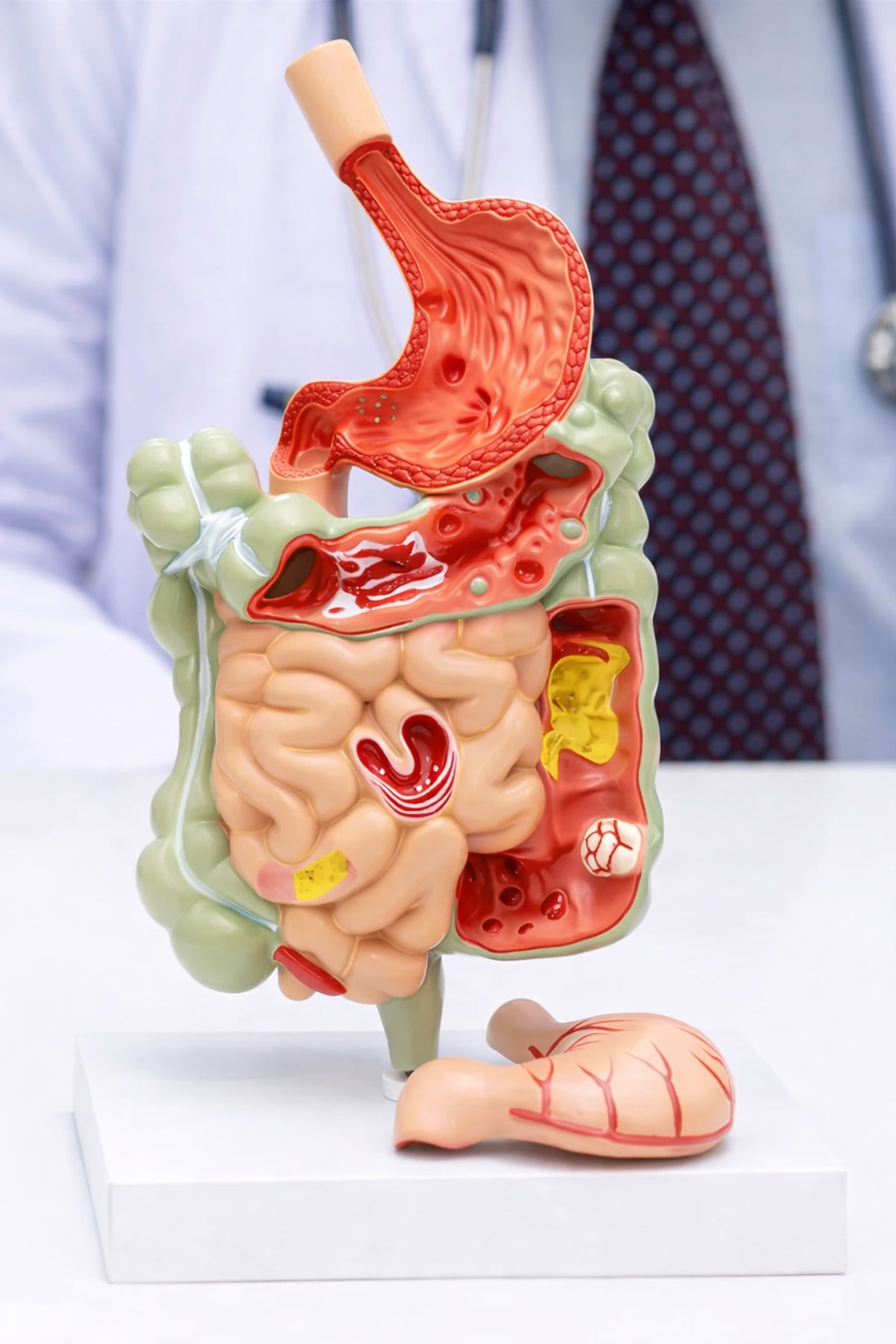
Bowel Cancer Screening
Early detection of bowel cancer is important and has been proven to save lives. Eligible Australians aged 50 to 74 are encouraged to participate in the National Bowel Cancer Screening program. You can also talk with your GP about how to access bowel cancer screening.
If you have returned a positive screening test, have a family history of bowel cancer or a genetic condition associated with bowel cancer, it is recommended that you undergo a screening colonoscopy.
Gastroscopy
Gastroscopy is a procedure to assess the upper digestive tract which includes the oesophagus, stomach and the first part of the small bowel.
A gastroscopy may be recommended if you experience problems with swallowing, unexplained nausea and vomiting, acid reflux, indigestion, abdominal pain or discomfort, or bleeding.
A flexible, thin tube equipped with a camera lens and light is used to carefully assess the upper digestive tract. Biopsies or tissue samples are obtained if necessary, and is often routinely performed.
Refer to this link for further information: Gastroscopy GESA
Colonoscopy
Colonoscopy is a procedure to assess the lower digestive tract, mainly the large bowel, as part of bowel cancer screening for example. This procedure is done under sedation.
Other reasons to consider undergoing colonoscopy include: abdominal pain, bleeding, unexplained change in bowel habit, assess for underlying inflammatory bowel disease
Polyps are growths of tissue in the lining of the large bowel, and can range in size from a few millimetres to a few centimetres. These are usually removed if found during your colonoscopy, as they may have the potential to develop into bowel cancer over time.
Refer to this link for further information: Colonoscopy GESA
Bowel preparation
Prior to your colonoscopy, you will be provided with specific instructions in regards to the bowel preparation. This is an important prerequisite to be completed, usually on the day prior to your procedure.
An optimal bowel preparation means that your large bowel has been cleansed of solid and opaque liquid contents, and allows for thorough detection of polyps or cancerous lesions.
Refer to this link for further information: Bowel Preparation GESA
Capsule Endoscopy
Capsule Endoscopy is a non-invasive procedure that allows for the examination of your digestive system, with a particular focus on the small bowel that is not routinely reached by standard gastroscopy and colonoscopy. A pill-sized video capsule is swallowed, and will take a recording of your digestive tract as it passes through.
Instructions for capsule endoscopy can be found here.
Refer to this link for further information: Capsule Endoscopy GESA
Direct-access endoscopy
You can book directly for a gastroscopy and/or colonoscopy without prior consultation if you meet the following criteria:
- Have an indication for the requested procedure as outlined in the Medicare Benefits Schedule (MBS).
- Able to provide consent
- Aged under 80 years
- Does not have complex medical conditions such heart, lungs or kidney issues
- Takes no or little regular medications, including no blood thinning tablets other than Aspirin, medications for diabetes such as Ozempic, insulin, or -flozin tablets.